Tom O’Malley
Three Bags FullTom O’Malley is a local pub-goer whose appetite for a good story repeatedly shapes how Glennkill hears about George Glenn’s death. He is at once an accidental witness, an ambitious talker, and a man drawn into the search for George’s hidden goods. His accounts turn the quiet scene of the body into spectacle; much later, the sheep’s staged reenactment makes him recognize that their performance is evidence rather than entertainment.
First encounter with the body
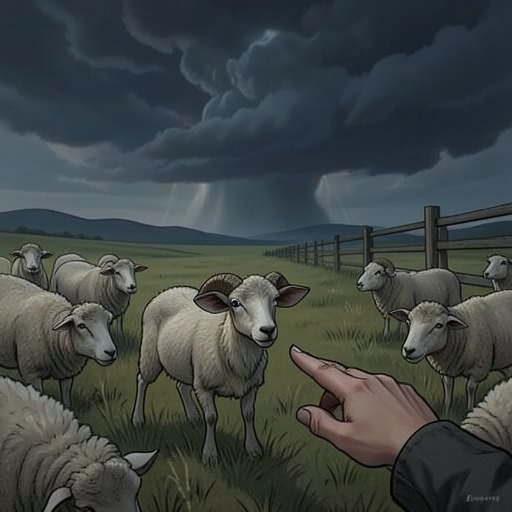
A little after Othello has withdrawn beneath the dolmen and Miss Maple has gone to wash blood from her nose, Tom comes along the footpath from Golagh toward Glennkill. He is not entirely sober, but the fresh air and the landscape prompt a sudden practical vision: the village could make its future in tourism. He sees George’s flock grazing peacefully, with one sheep perched on the cliff like a small white lion, and calls out a warning against falling. The sheep’s disdain leaves him feeling foolish; he resolves to discuss his tourism idea with the men at the pub.
Tom tries to approach the sheep, but Othello keeps out of reach without needing to move much. Then Tom notices the spade. He considers it a fine tool and decides it will be his, hiding it beneath the dolmen so he can retrieve it after dark. Though local stories make him uneasy about returning there at night, the prospect of owning the spade wins. As he takes hold of its handle, his foot strikes something soft. The discovery brings him an unusually attentive audience at The Mad Boar that afternoon, establishing the gap between the disturbing event he has encountered and the public performance he makes of it.
A story that changes in the telling
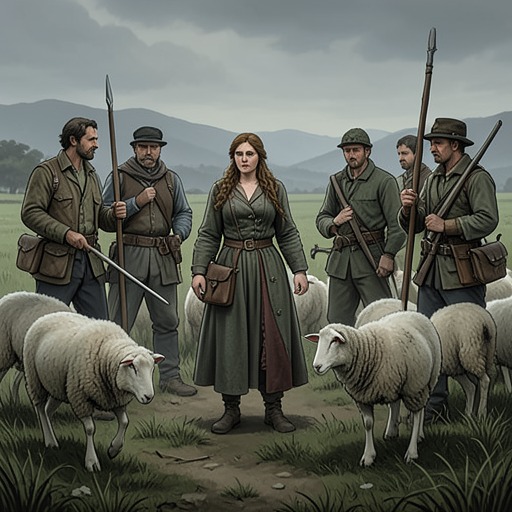
When Tom leads a crowd back to the meadow, he appears at its head, with children, women, men, and elderly people following in groups. He brings a rusty spade and drives it into the earth at least ten paces from the place where George had lain. He then uses strides in opposite directions to mark out where the blood supposedly reached and where he claims he stood. In this telling, George’s face is horribly distorted, his tongue bright blue and hanging out, and blood is everywhere.
The account is contradicted by what Miss Maple knows of the body: George had looked as though he had simply lain down to sleep. The discrepancy is more than a flourish. Tom turns a scene that had appeared quiet and almost undisturbed into a lurid public spectacle, and the crowd responds with a mixture of horror and delight. His performance establishes him as a vivid but unreliable narrator of the discovery; the novel gives the reader the counterevidence rather than asking Tom’s confidence to stand as proof.
Land, contraband, and the will
Tom’s ambitions recur in a different register during a nighttime attempt with Harry the Sinner and Josh to open George’s van and find its contents. This time Tom smells of no drink. He insists that the group is acting for Glennkill, but his own explanation dwells on the value of George’s land and the possibility of making money from it. He alleges that George kept tourists away, even frightening them with a pistol, while making money through nighttime boats bringing contraband from the beach to the caravan, followed by George’s departure in his old car the next day. These are Tom’s claims, not independently confirmed facts in the scene.
He also invokes reports that children had seen George with a black ram, presenting the association as something shameful. The ram is Othello, whom George had rescued, but Tom’s account reduces that relationship to gossip and insinuation. His professed concern for Glennkill’s reputation sits beside his interest in opening the van and his earlier hope of turning the landscape into a tourist attraction. The novel leaves the precise mix of civic concern and self-interest unresolved, while making the commercial value Tom sees in George’s land unmistakable.
At the announcement of the opening of George’s will, Ham asks Gabriel whether he will attend. Gabriel notes that everyone has heard about the occasion and expects to come, except Father Will, who will present himself as uninterested in worldly matters. Later, when the lawyer explains that an authorized representative must accompany the animals to Europe as their shepherd, Tom asks in suspense who will receive the role. The lawyer says the appointment has not yet been decided and asks whether anyone wants the job; the gathering falls silent. Tom’s question records his attention to the opportunity, but the evidence does not establish that he volunteers or receives the position.
Recognition at the contest
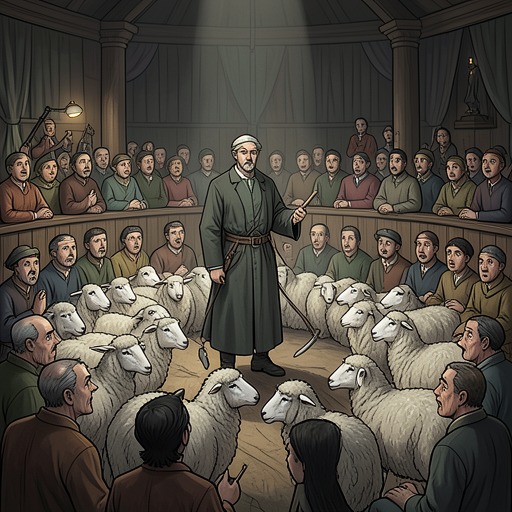
At the Smartest Sheep in Glennkill contest, Tom has been drinking Guinness and has spent several minutes looking down rather than at the platform. When he finally looks up, he sees a long shape with a metal implement sticking in it, a sheep lying still, and a black four-horned ram beside it. His foot strikes something soft. The scene recalls the body beneath the dolmen and the spade he had once coveted; this time, however, the arrangement is being presented by the sheep before a human audience.
Tom calls out George’s name. When Josh tells him to sit down, Tom points to the stage and recognizes that the sheep are trying to tell the humans something about the murder. The man who once supplied a false, sensational account of the discovery now reads the animals’ performance as a message. His recognition does not itself solve the killing, but it marks a reversal in his role: the sheep are no longer picturesque figures in a tourism prospect or objects of gossip, but witnesses whose actions can communicate what human observers have failed to understand.
Narrative role
Tom’s appearances link several competing versions of Glennkill: the landscape as a tourist asset, George’s land as a source of suspected contraband, and the meadow as the site of a death that the sheep are trying to explain. His first response to the spade is possessive; his return to the scene turns discovery into public theater; his final recognition gives the sheep’s reenactment a human interpreter. The sharpest contrast is between the ease with which he invents detail about George’s corpse and the importance of his eventual attention to the animals’ concrete demonstration.